Guidance and confidence in exam preparation
Turning overwhelming study routines into confident, organized, and consistent practice.
Client
Sanar, 2022
Role
Product Designer
Product trio
Lays Prates
Raquel Vilas
Bruna Gonçalves
Business needs
Boost users engagement and retention by increasing students’ confidence on their likelihood of success on medical residency exams.
User needs
Students needed a clearer, calmer way to prepare for residency exams - one that helps them know what to study next and stay consistent.
How might we bring clarity, consistency, and confidence to residency exam preparation?
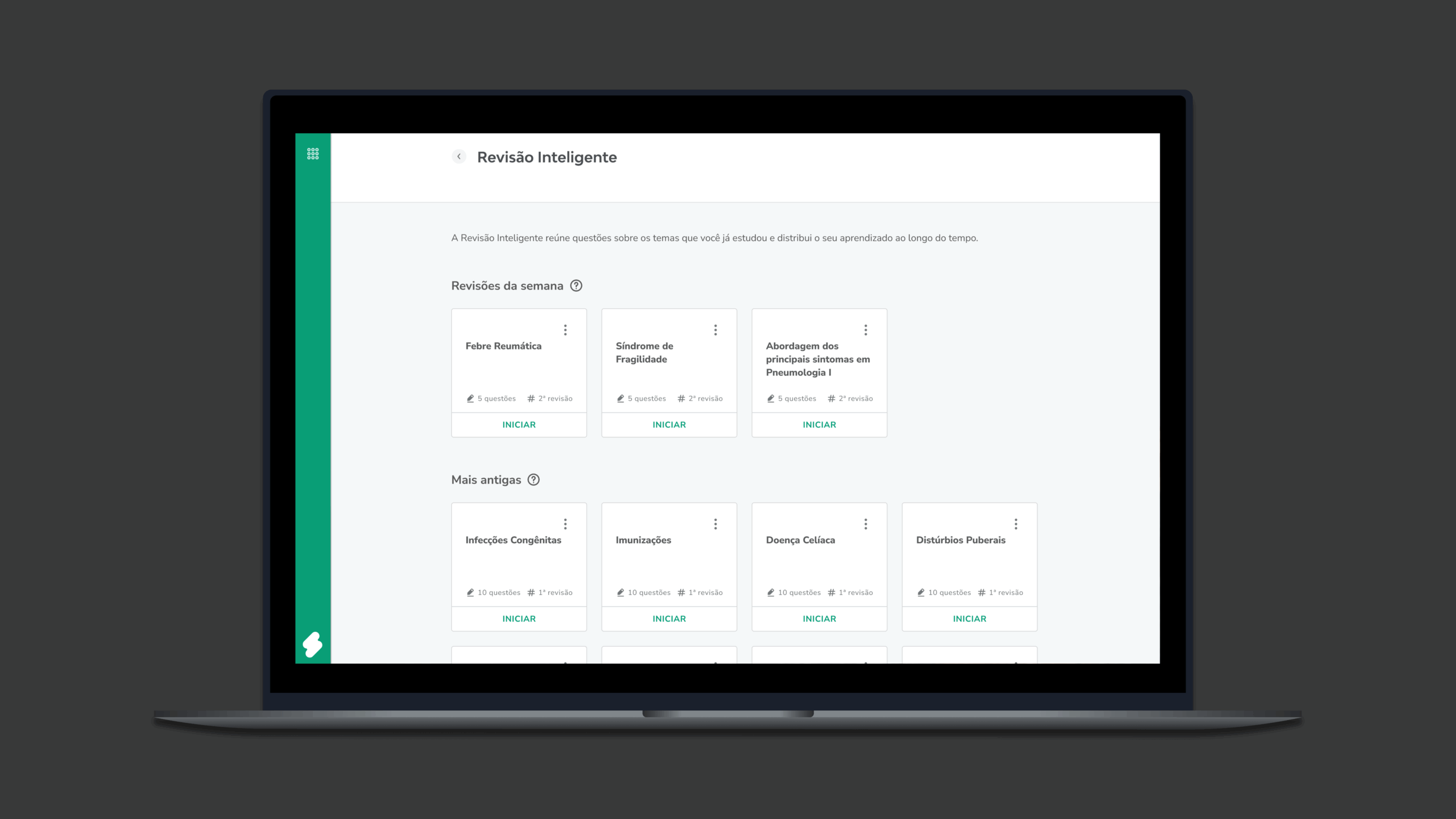
By automatically organizing reviews around when each topic was taught - guiding students toward a more consistent and effective study practice.
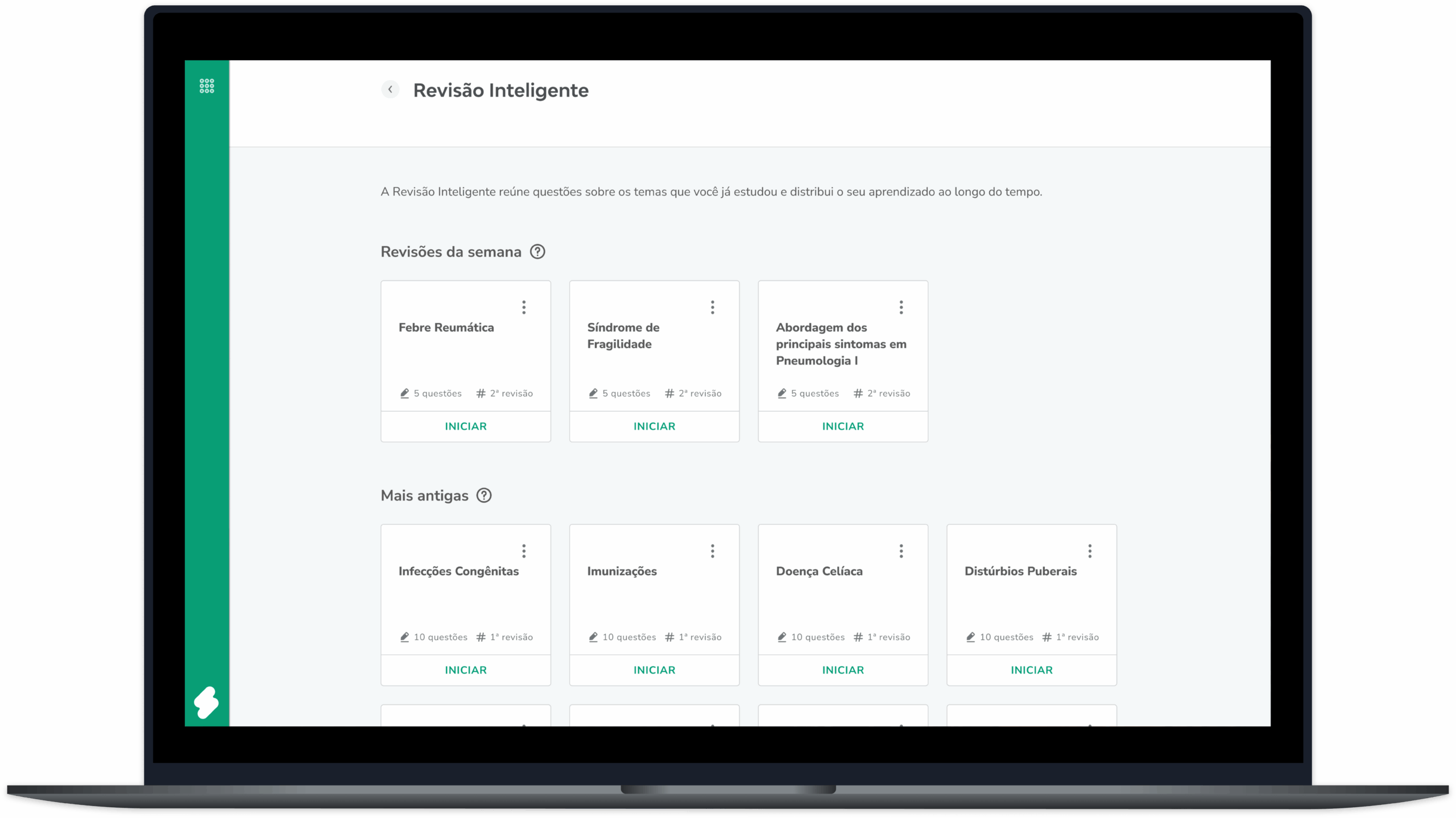
Early results (first 2 months)
22% feature adoption
12% increase in weekly practice
More students kept practicing with questions weekly for at least 7 weeks, suggesting potential for building more consistent study habits.
How we got there
Understanding the context
From previous continuous discovery cycles, we (as the product trio) revisited our Opportunity Solution Tree to identify opportunities with the highest impact on business outcomes. We prioritized the opportunity around inconsistent practice patterns, as it was a core feature that impacted most students frequently, had high potential to drive customer engagement by boosting students' learning experiences and could be a market strategic differentiator.
Research
To understand why practice sessions were breaking down, I combined three lenses:
- A survey with 78 students to surface goals, habits, and the barriers shaping their prep journey.
- Product analytics to reveal real engagement patterns - when students trained, when they dropped off, and where consistency was lost.
- 19 interviews with in-context task observation to uncover the beliefs, routines, and frictions that made sustained practice so difficult.

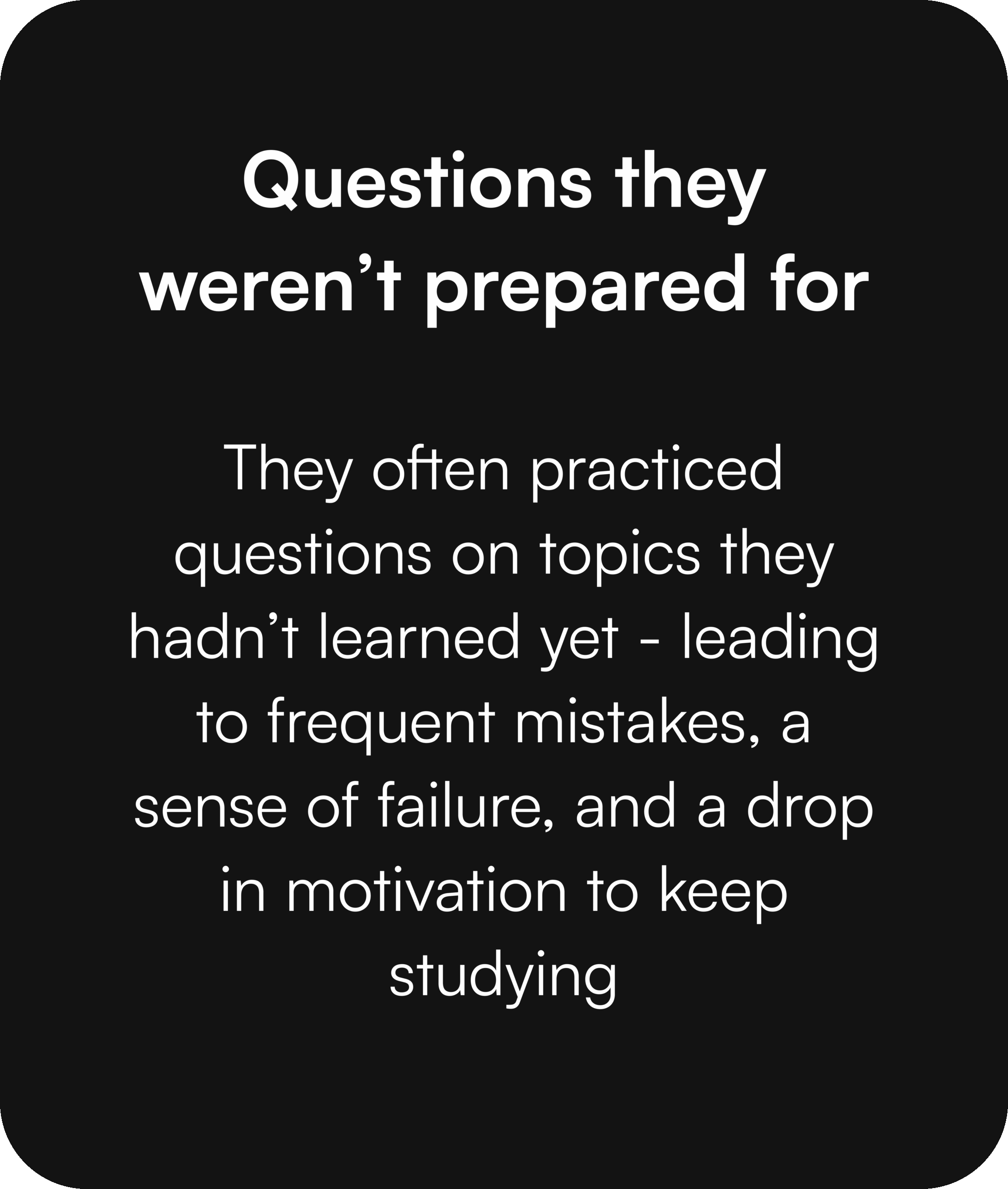
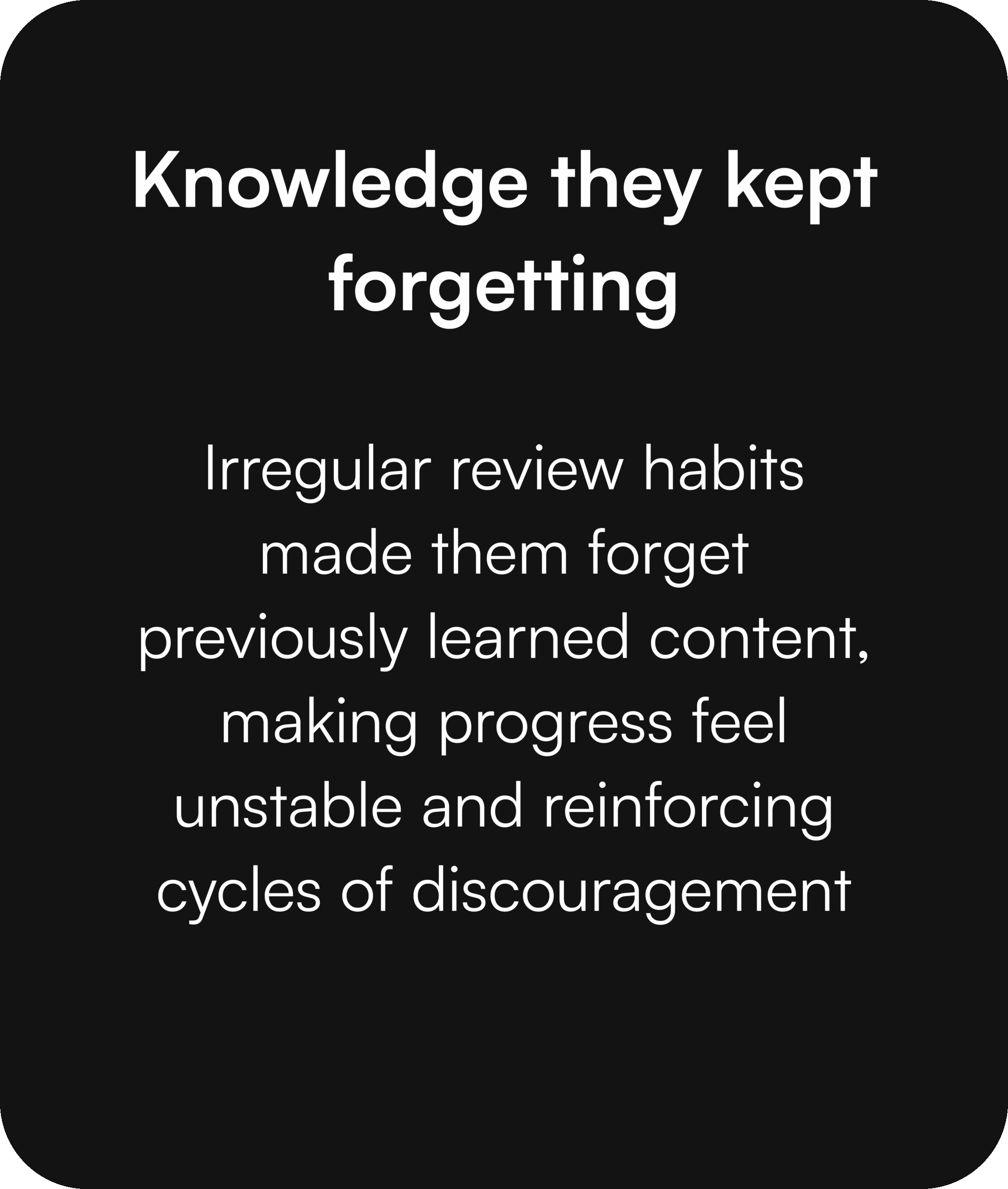
Prioritizing the problem & shaping the solution
I started by sketching an ideal future journey to clarify what “success” should look like for students. From there, I facilitated a team workshop to surface ideas and hypotheses around the most critical moments of the experience. Together as the product trio, we refined the scope, consolidated solution directions, and updated the journey map.
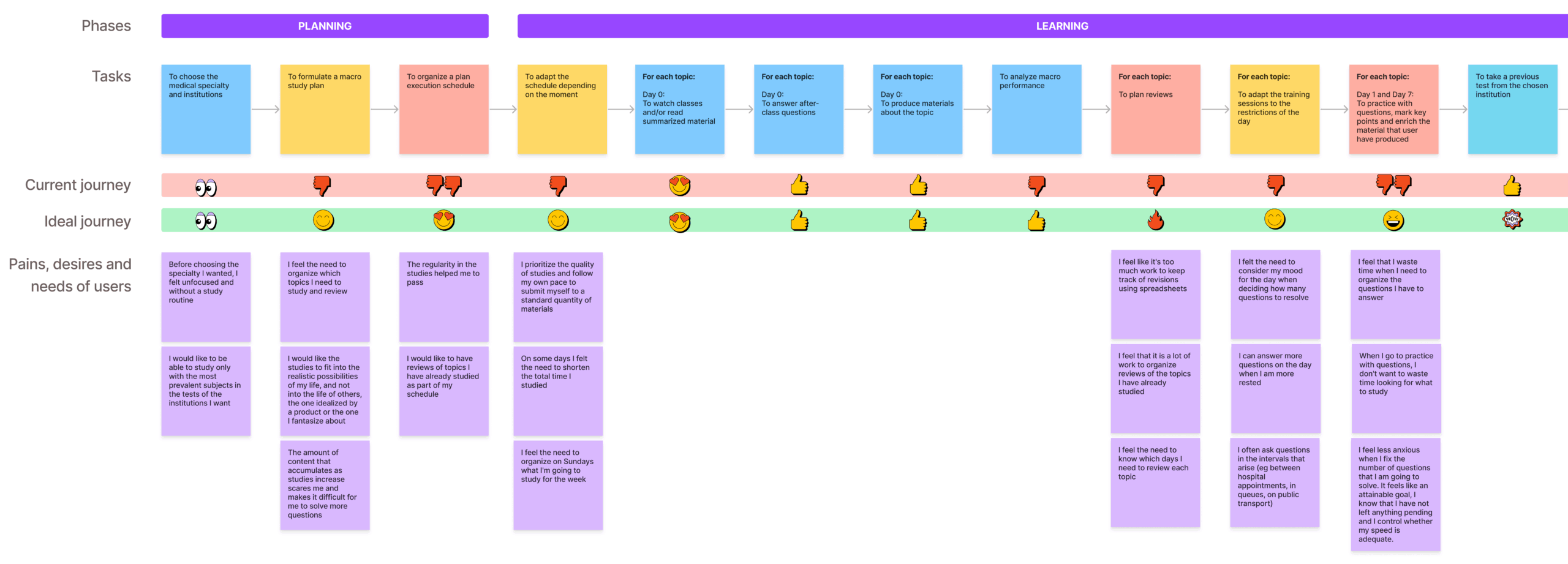
Designing and refining the solution
Based on early rapid prototypes, we analyzed risks, identified what needed to be validated, and defined both the experiment and the MVP to move forward with.
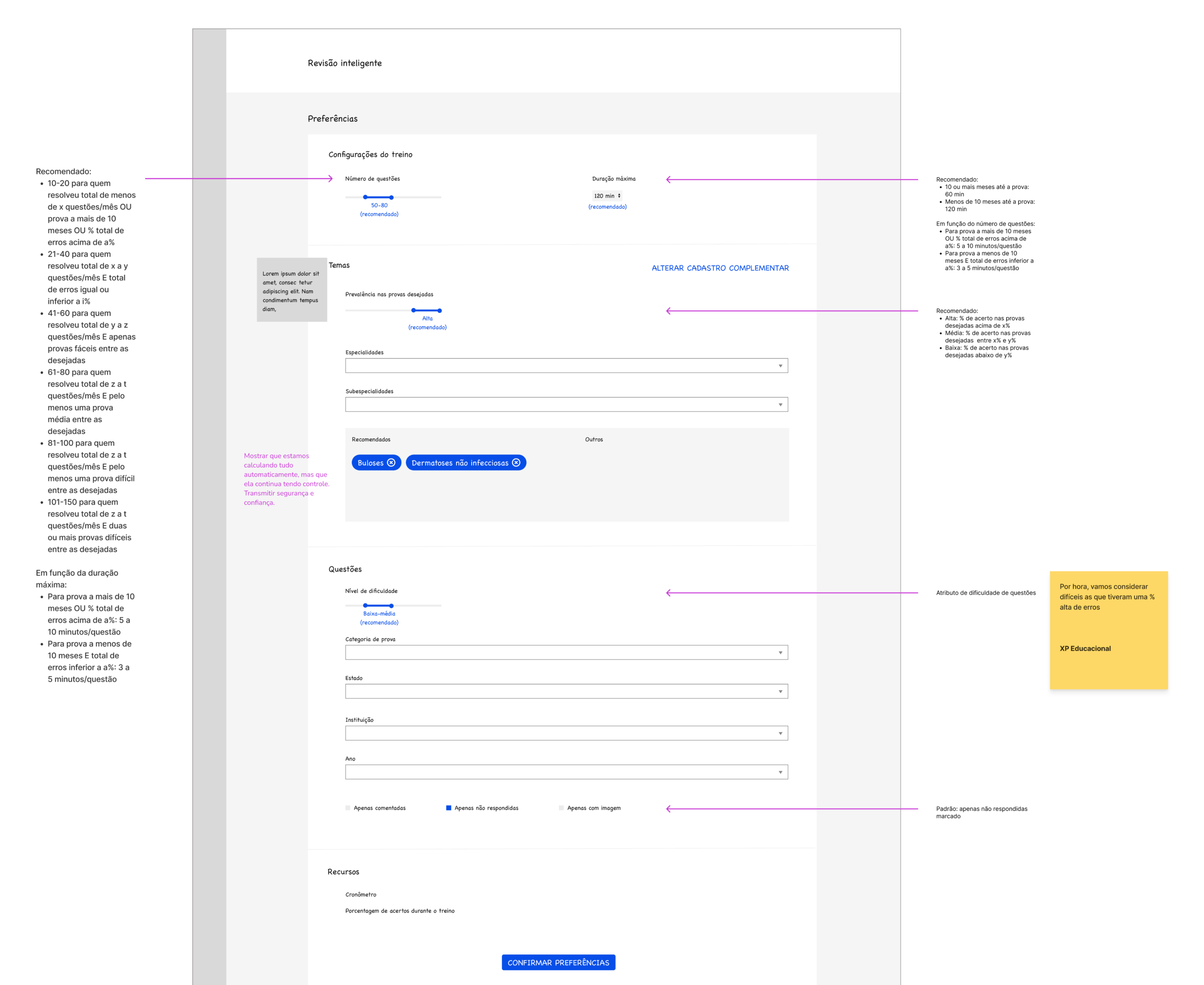

With the direction set, I designed high-fidelity prototypes and iterated on them through team feedback and design reviews. During implementation, I closely supported developers and reviewed the product to ensure product quality.
Selected Works
Are we a fit?
Currently available for remote part-time contract work. Let’s connect!
Designed with care © 2025