Designing for cultural connection
A warm, simple way to discover local flavors, meet Cerrado producers and book meaningful cultural experiences.
Client
Armazém Grão do Cerrado, 2025
Role
Product Designer
Business needs
A way to extend the in-store experience into a digital product that could educate, connect and empower visitors while supporting local producers.
User needs
Visitors often struggle to understand the cultural value behind the local products, and they look for simpler, more intuitive ways to explore authentic experiences in the region.
How might we help visitors easily discover, understand and value the local culture?
By connecting them with authentic producers, local products and guided experiences, we help visitors understand the region in a deeper, more meaningful way.

How we got there
Understanding the context
I started with desk research and a stakeholder map to understand how local products circulate in the region and how the Armazém fits within the tourist ecosystem. From this, I formed initial hypotheses about tourist behavior, barriers, and opportunities.
User interviews
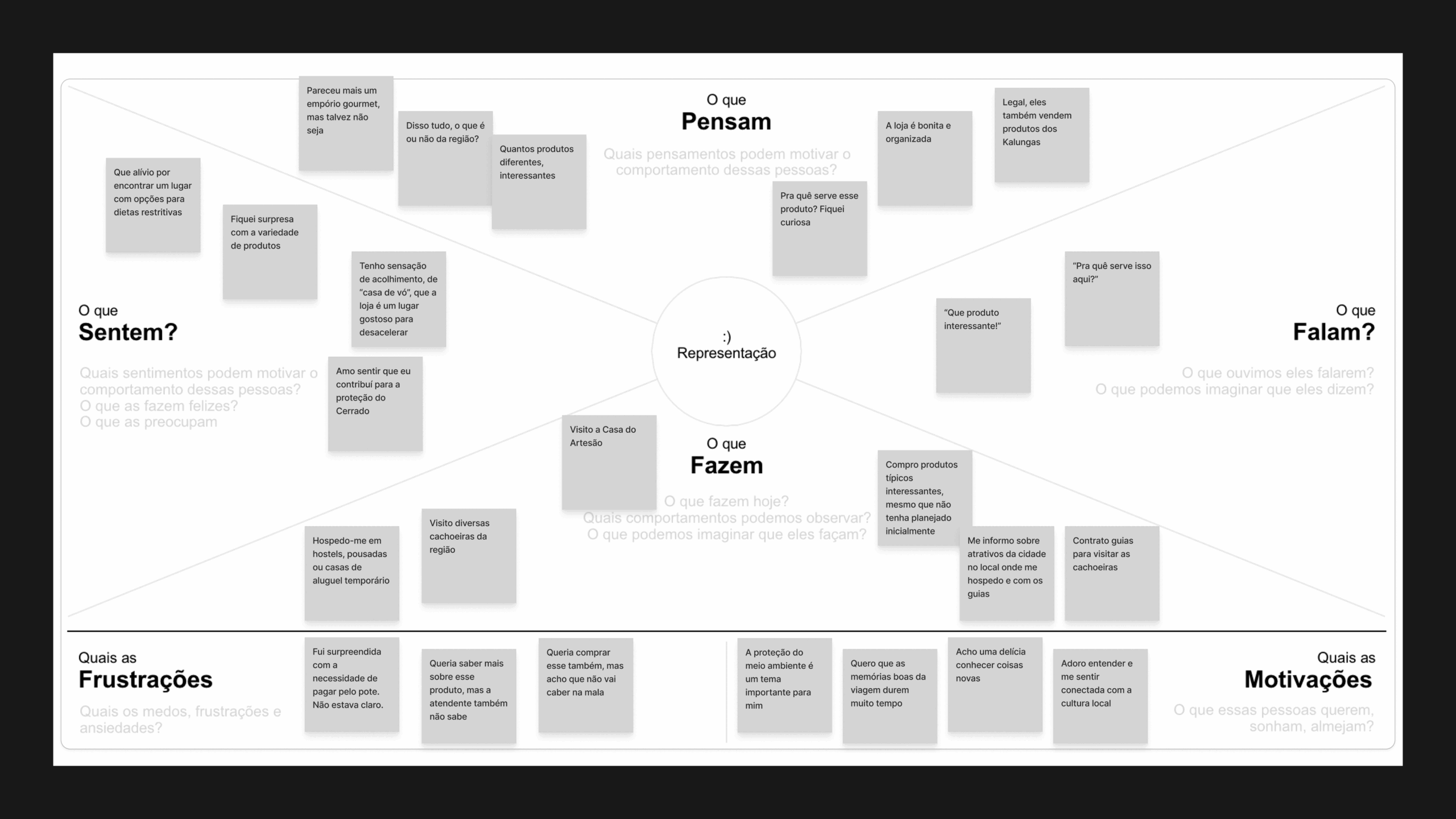
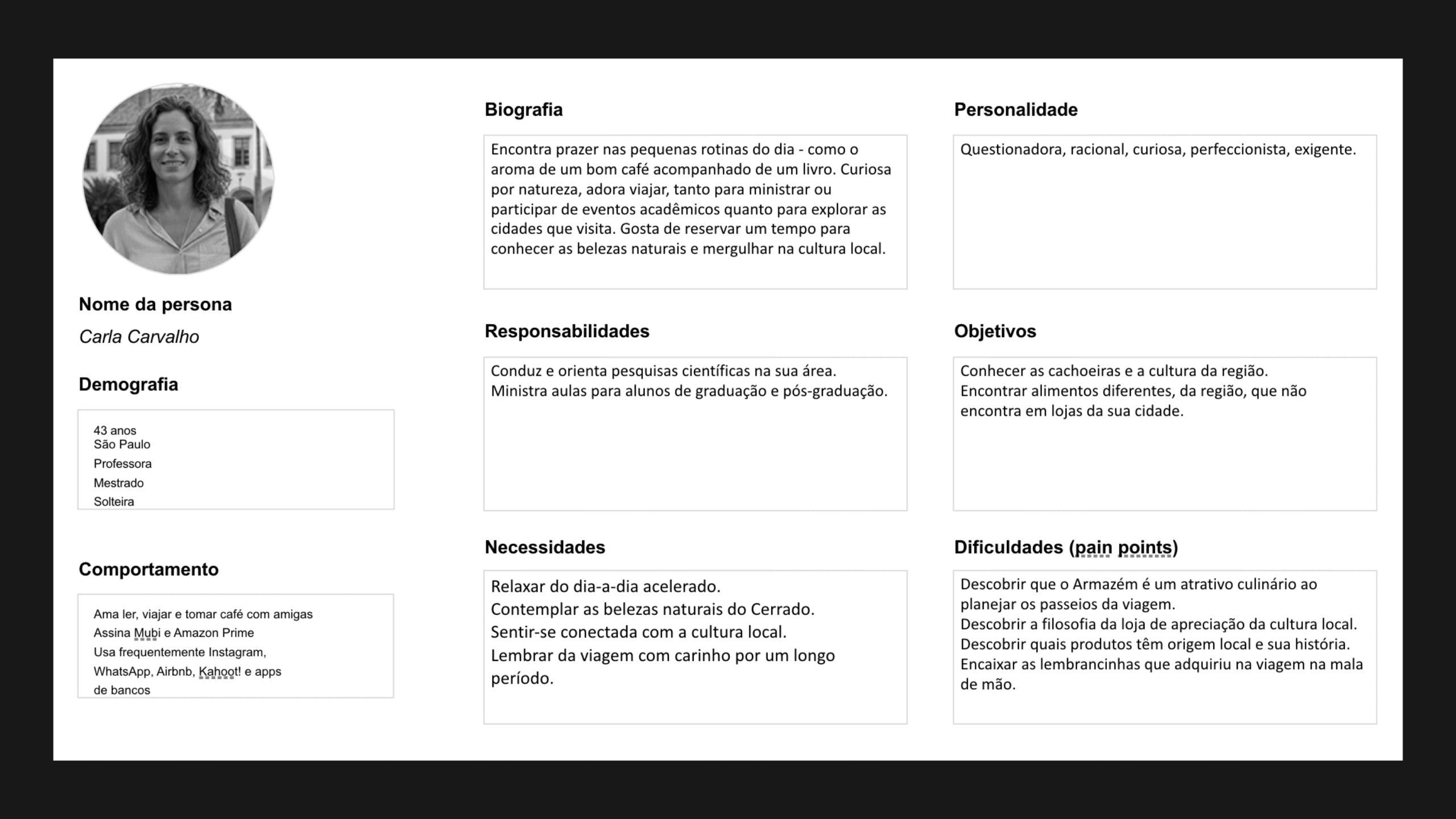
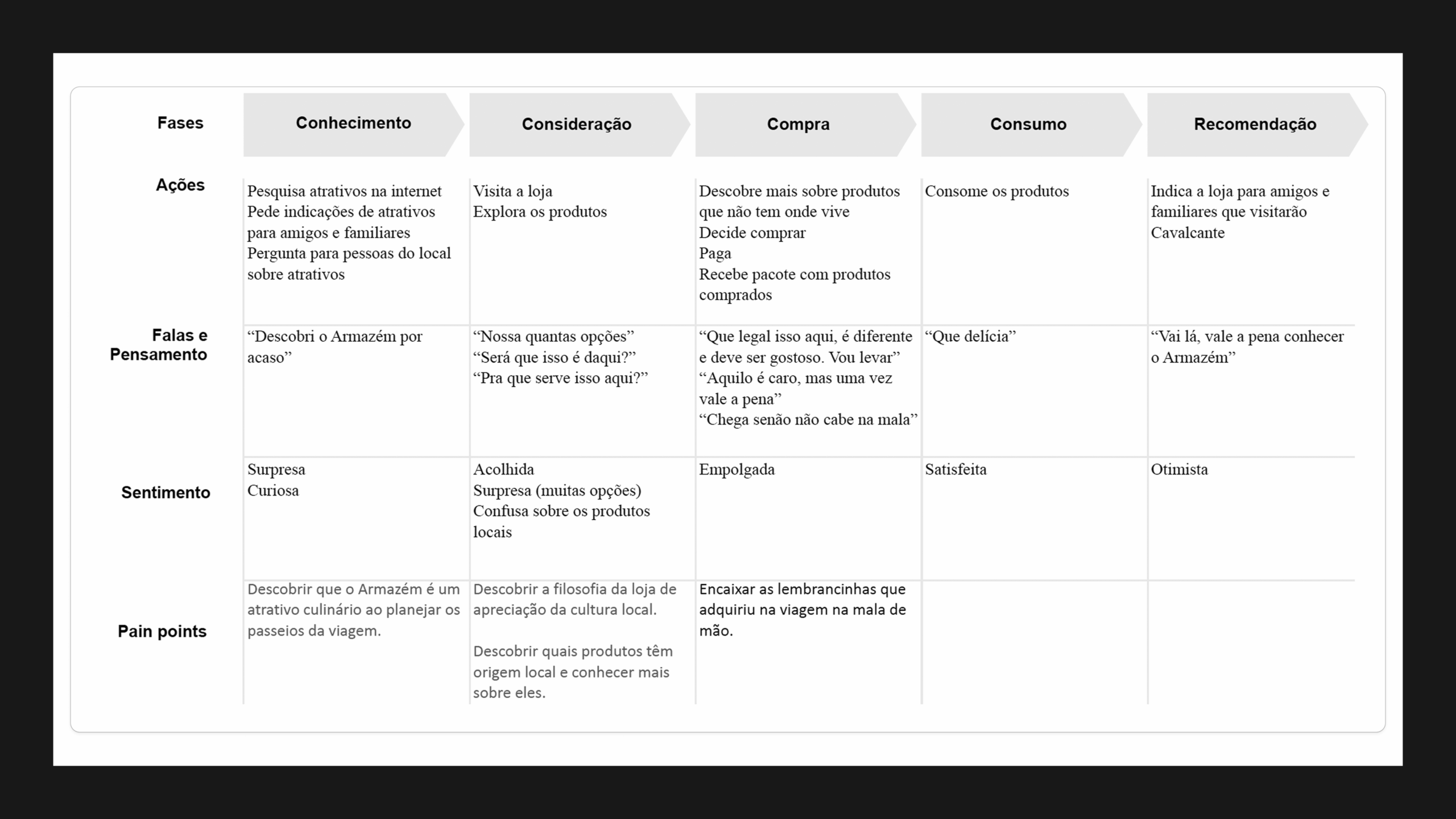
I conducted 5 in-depth interviews with tourists to explore motivations, expectations, and perceptions of local products and the Armazém experience. I synthesized the interviews into a persona, an empathy map, and a current journey map to clarify motivations, pain points, and key opportunities.
User interviews
I conducted 5 in-depth interviews with tourists to explore motivations, expectations, and perceptions of local products and the Armazém experience. I synthesized the interviews into a persona, an empathy map, and a current journey map to clarify motivations, pain points, and key opportunities.

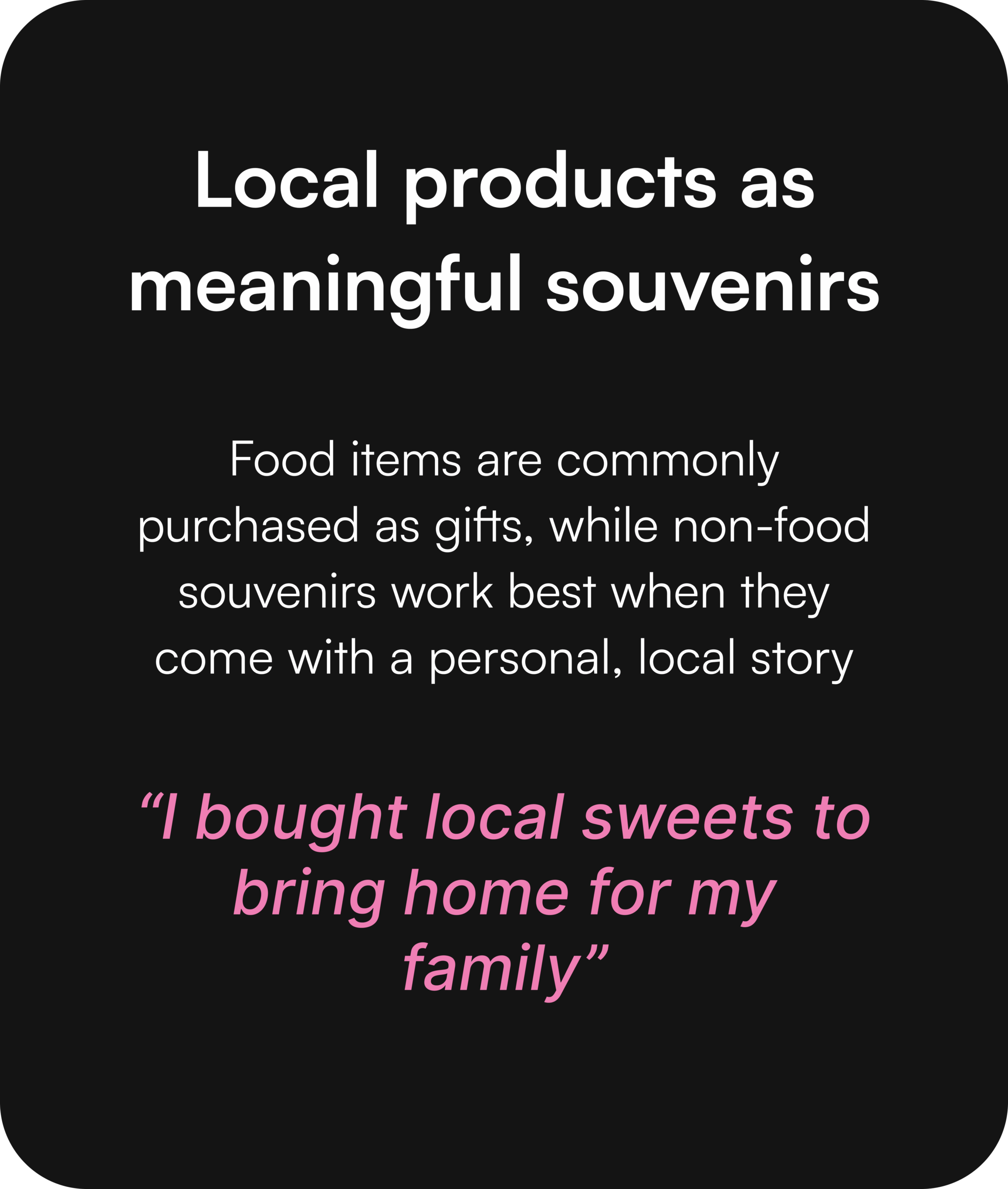
Hypothesis Validation
✔️ Tourists are open to products that value sociobiodiversity
✔️ They struggle to identify this type of experience when planning the trip
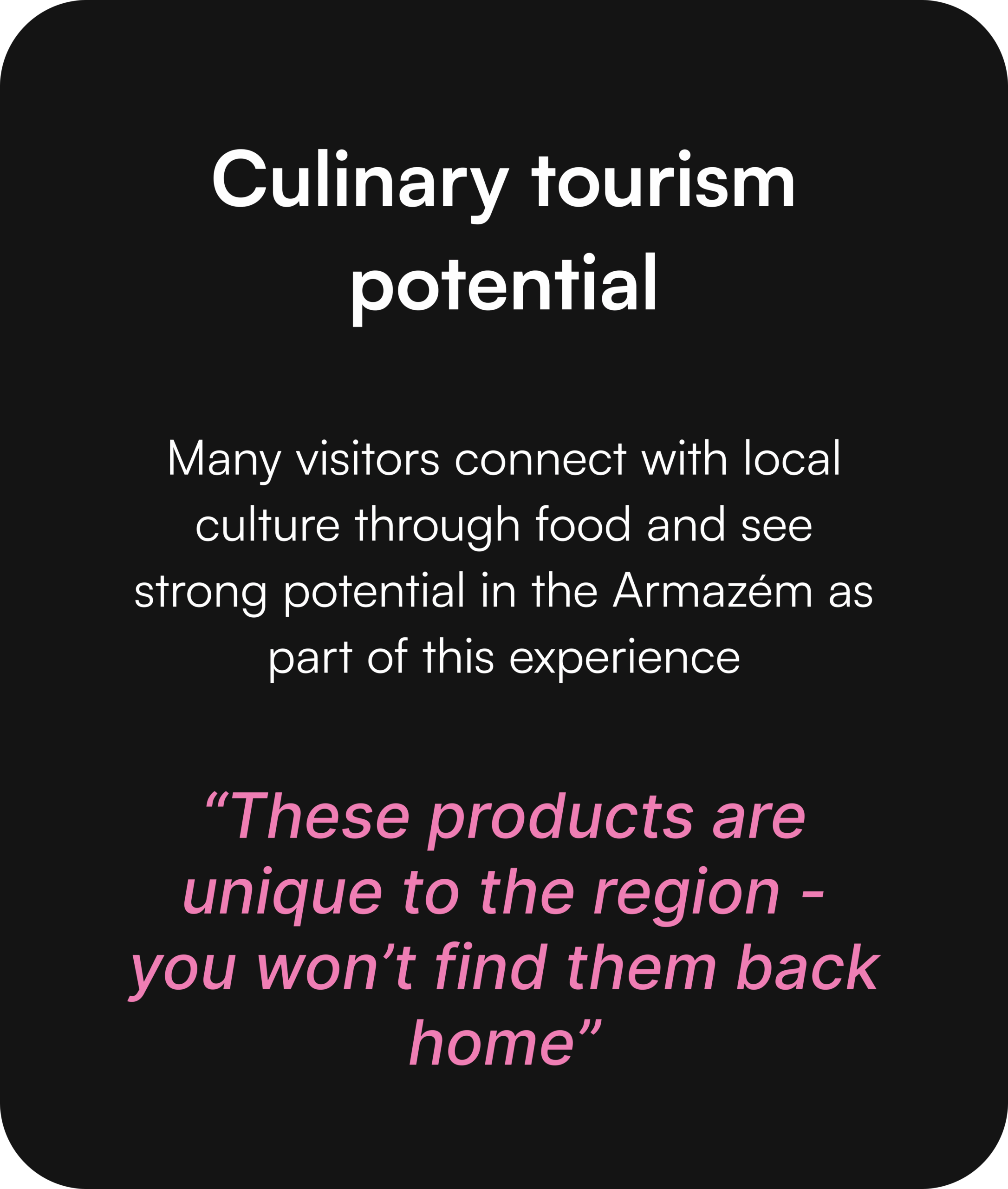
✔️ Visitors have difficulty understanding product origin and value inside the store
❌ They struggle to find souvenirs they like
Prioritizing the problem & shaping the solution
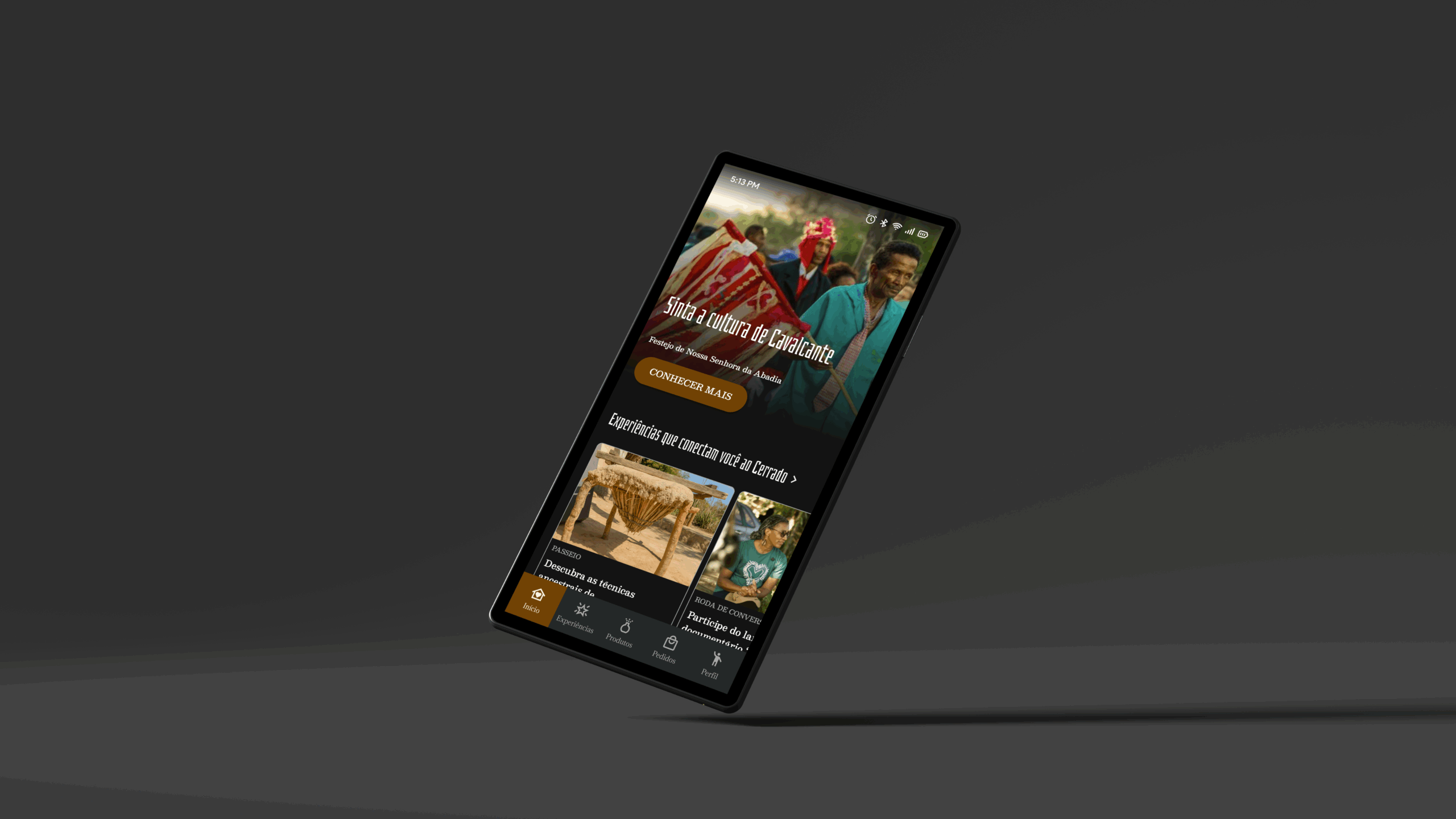
I reframed the challenge through a How Might We (HMW) question and, together with the business owner, prioritized the opportunity that offered the highest user and business value. We ultimately chose to focus on a mobile app that helps visitors explore, learn about, and appreciate local sociobiodiversity products.
Competitive analysis
A competitive analysis using Porter’s Five Forces showed that the sociobiodiversity niche in the region is highly promising, offering strong differentiation. To mitigate risks, I recommended connecting products with immersive cultural and gastronomic experiences, beyond a simple catalog.
Business model proposal
The platform acts as an intermediary service that facilitates discovery, education, and purchase - while strengthening local value chains and expanding market access for producers.
Product vision proposal
To provide the most intuitive, delightful, and immersive experiences for learning - and emotionally connecting - with the sociobiodiversity of Cavalcante.
Designing and refining the solution
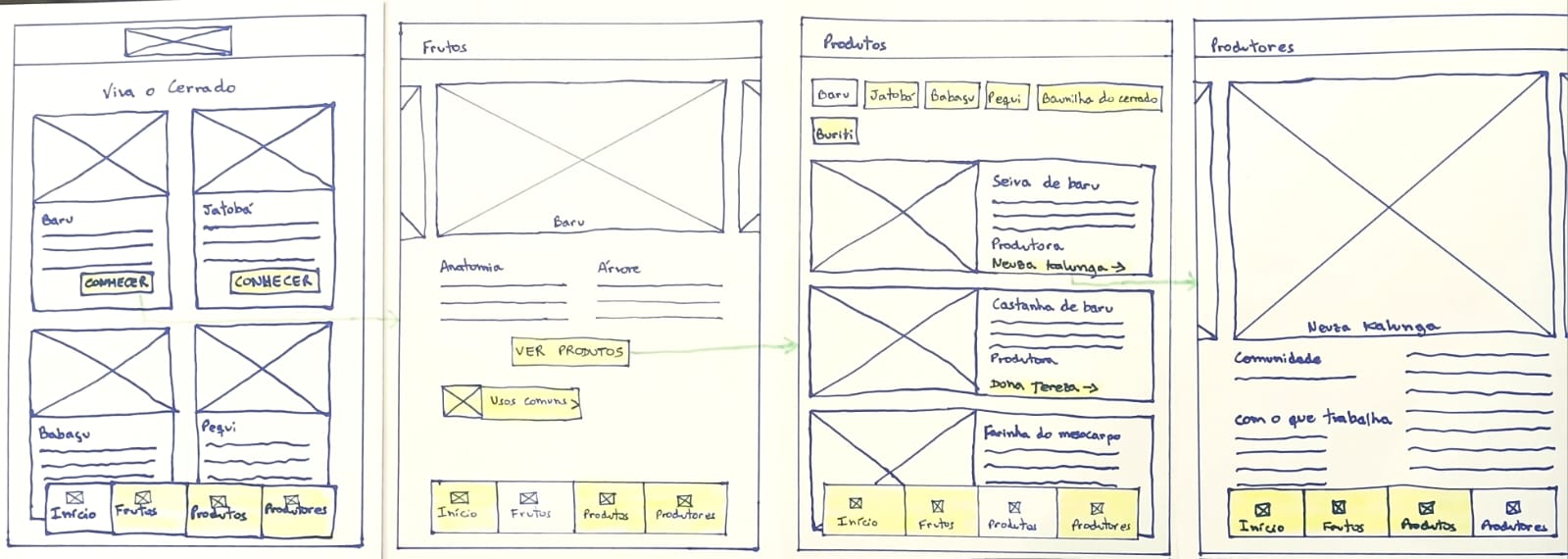
Before moving into high-fidelity design, I sketched different flow and structure possibilities to quickly explore alternatives and avoid premature investment.
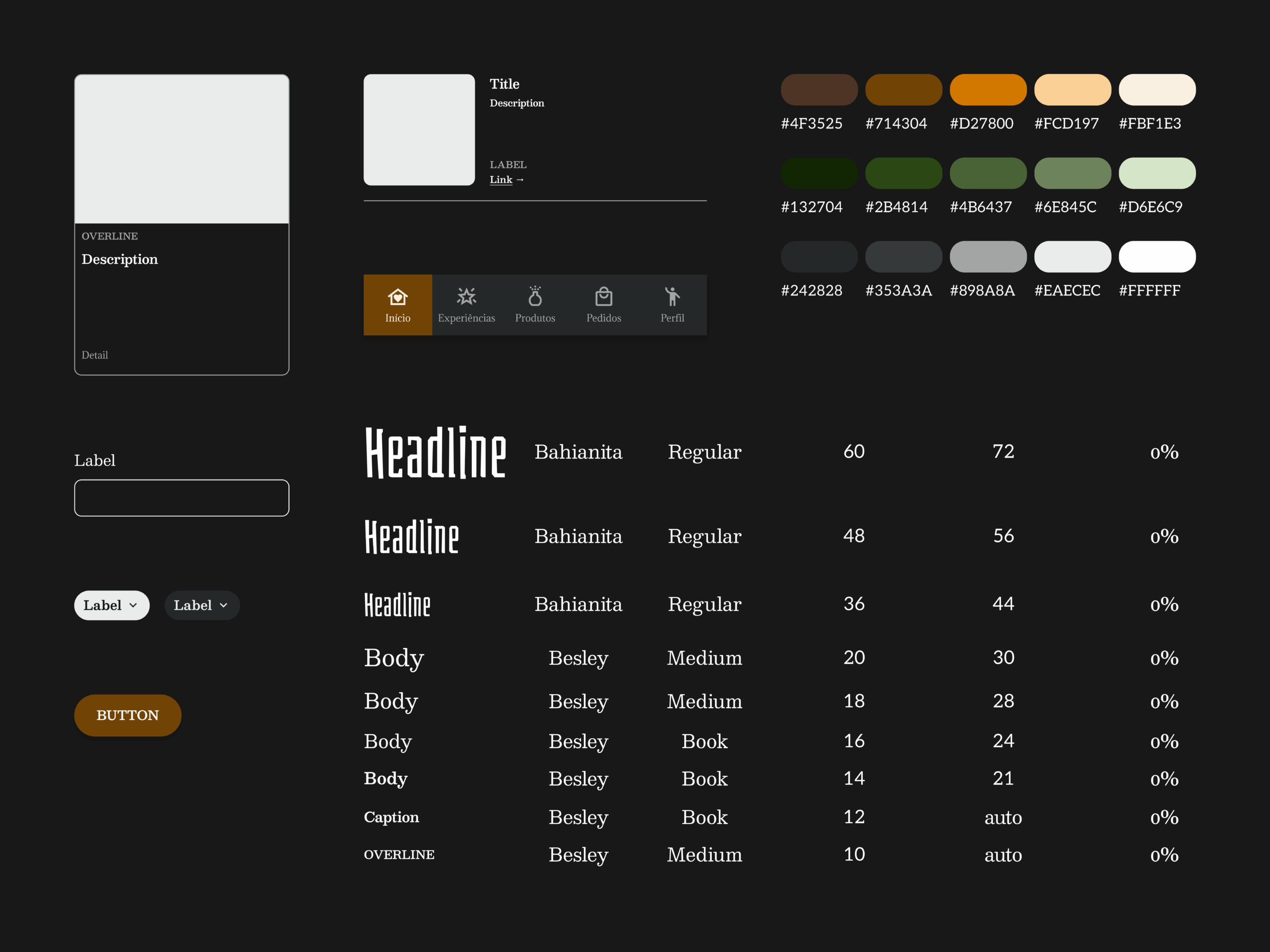
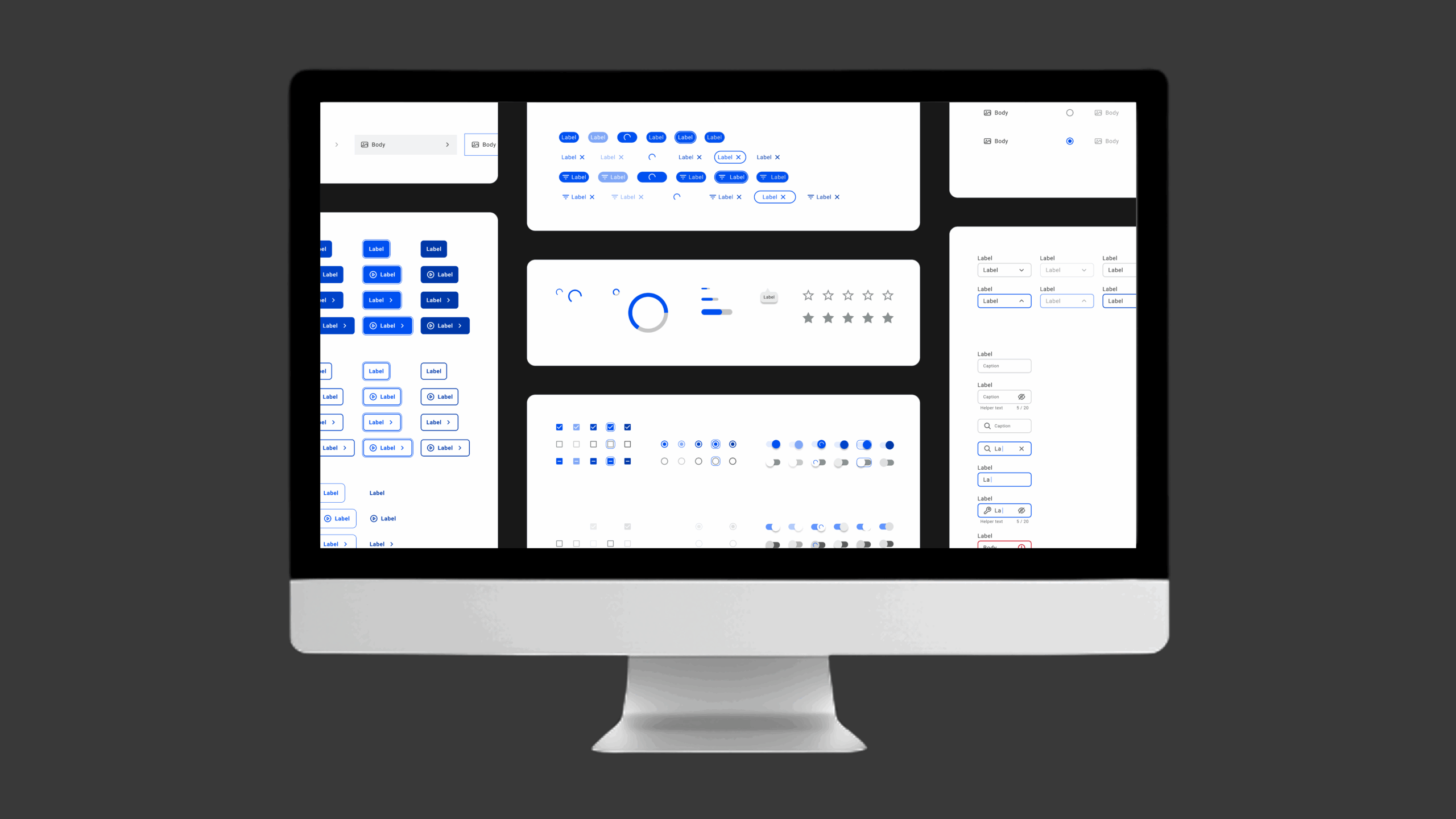
With a direction in mind, I built a moodboard to establish the visual foundations - color, typography, spacing and grids. Then I created the first set of UI components and began designing the high-fidelity screens in Figma.
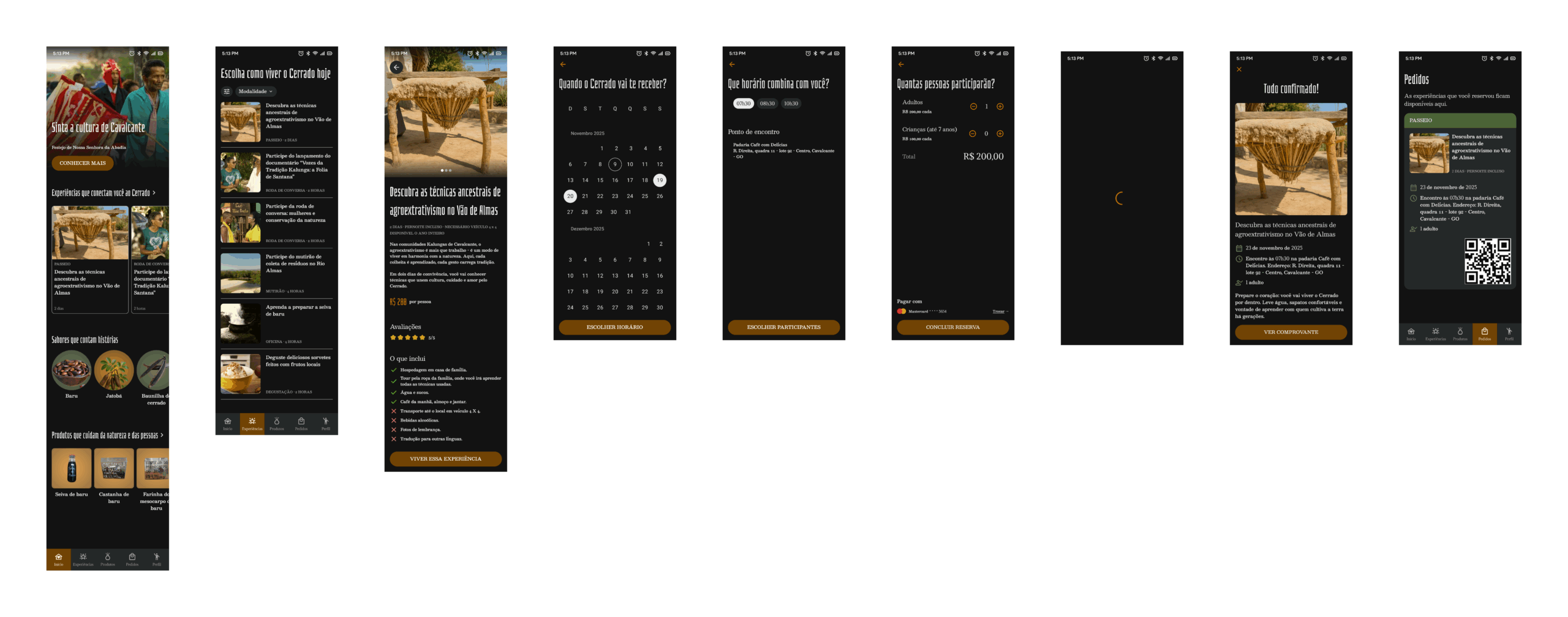
To validate the model, I developed a clickable prototype for the main flow of the app, ran unmoderated usability tests on Maze with 3 participants and refined the solution. This iterative process ensured that the final solution was not only visually consistent, but also aligned with user needs and business goals.
Why not to build it
Is the solution viable for the business?
Critical red flags make this business unviable as planned. Unit economics don't work: with an estimated average booking of BRL 150 and 10% commission (BRL 15), customer LTV would be ~BRL 22.5 (assuming 1.5 bookings per tourist). Based on benchmarks from similar Brazilian marketplaces (travel/local experiences) and assuming a mix of paid acquisition (60%), organic (30%), and partnerships (10%), blended CAC would sit at BRL 100-200, resulting in an LTV/CAC ratio of 0.1-0.2, far below the healthy benchmark of 3+. Additionally, operational complexity is high while the addressable market is very limited.
Will users pay for / use the solution?
This remains the most critical unvalidated assumption. Actual willingness to pay a premium for "curated authenticity" is uncertain and price sensitivity was never tested with real users. This assumption could be validated through landing page tests, waitlists or concierge MVP before development.
Selected Works
Are we a fit?
Currently available for remote part-time contract work. Let’s connect!
Designed with care © 2025